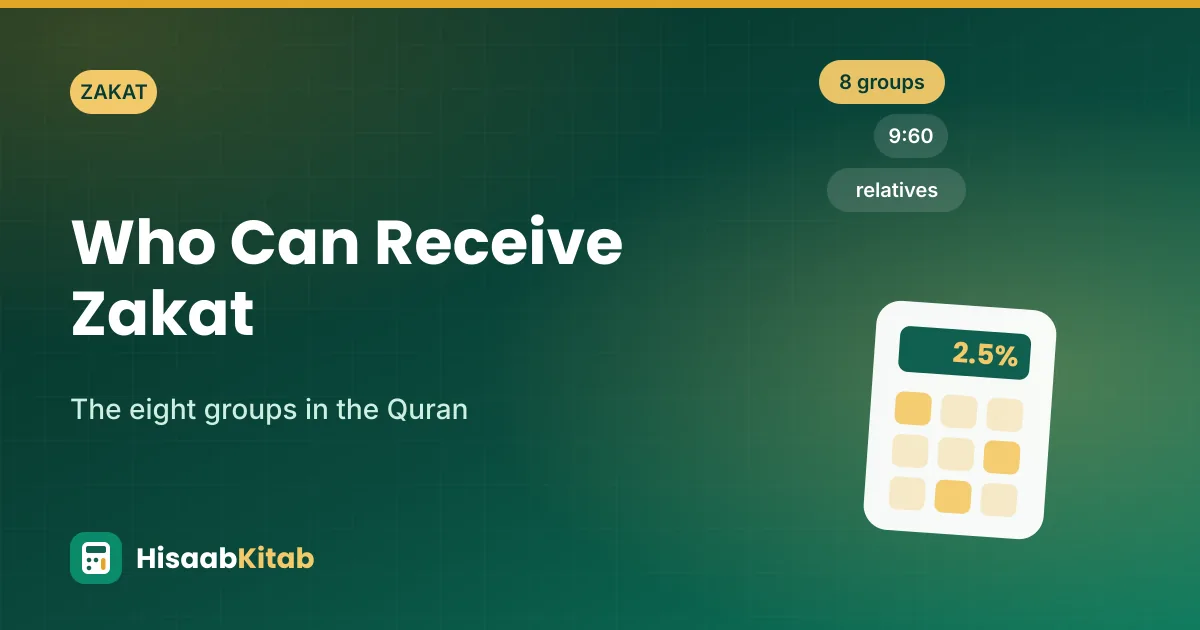
The Quran (Surah At-Tawbah 9:60) names eight groups who can receive zakat. In everyday life most zakat goes to the poor and the needy, people in debt and travellers in difficulty. Zakat cannot be given to your parents, grandparents, children or grandchildren, or to your spouse.
The eight groups
- Al-Fuqara, the poor: people with little or nothing.
- Al-Masakin, the needy: people whose income does not cover their basic needs.
- Amileen, those who collect and manage zakat.
- Muallafatul Quloob, those whose hearts are to be won over.
- Fir-Riqab, freeing people from bondage.
- Al-Gharimin, people in debt they cannot pay.
- Fi Sabilillah, in the cause of Allah.
- Ibn as-Sabil, the traveller who is stranded.
زکوٰۃ کے آٹھ مصارف سورۃ التوبہ کی آیت ساٹھ میں بیان ہوئے ہیں۔
Who cannot receive your zakat
- Your parents and grandparents, and your children and grandchildren, because you are already responsible for them.
- Your husband or wife (scholars discuss a wife giving to a husband, so ask your scholar).
- People who own wealth at or above the nisab beyond their basic needs.
- In the Hanafi school, the descendants of the Prophet (Sayyids).
Relatives you can give to
Brothers, sisters, uncles, aunts, nephews, nieces and in-laws who are eligible can receive your zakat, and many scholars say giving to needy relatives carries a double reward, for charity and for keeping family ties.
Giving through an organisation
Many people give zakat through hospitals, welfare trusts and charities. Before you give, check that the organisation keeps zakat in a separate fund, spends it only on eligible people and publishes audited accounts.
Making it count
- Have the intention that the payment is zakat when you give it or set it aside.
- Give the money as ownership to the person; zakat is not paid by building a mosque or school directly.
- You do not have to tell the person that it is zakat.
This follows commonly accepted rules and is not a fatwa. Scholars differ on some details, so ask a scholar you trust about your own case.
Why the Quran names these groups
Zakat is meant to move wealth from those who have more than they need to those who do not have enough, and to support people in hardship. Naming the groups protects zakat from being used for general projects, so it reaches people directly.
Example
Saima has Rs 60,000 of zakat to give. She gives Rs 20,000 to a widowed aunt with no income, Rs 15,000 to a neighbour who must repay a hospital debt, and Rs 25,000 to a hospital’s zakat fund for poor patients. All three are within the eight groups.
Checking eligibility
You do not need documents from every person you help, but you should take reasonable care. A person who openly lives well beyond their needs is not the intended recipient. When in doubt, many scholars say that if you gave in good faith after reasonable effort and later learn the person was not eligible, your zakat is still accepted.
Common mistakes
- Giving zakat to your own parents or children.
- Counting a gift to a mosque building fund as zakat.
- Giving zakat to a person who already holds wealth above the nisab.
- Not having the intention of zakat at the time of giving or setting aside.
Spreading zakat wisely
Some families split their zakat: a share to needy relatives, a share to people in their neighbourhood they know well, and a share through a trusted organisation for those they cannot reach. Keeping a simple note of what went where helps you check the total.
Quick checklist
- Recipient is in one of the eight groups.
- Not your parent, child or spouse.
- Intention of zakat made.
Practical examples
- A widowed neighbour with no steady income: eligible as poor or needy.
- A cousin who lost his job and has rent arrears: eligible as needy or in debt.
- Your own unemployed son: not eligible from you, because you are responsible for him.
- A student from a poor family: eligible as needy.
Urdu mein khulasa
زکوٰۃ فقراء، مساکین، زکوٰۃ کے کارکنوں، مؤلفۃ القلوب، غلاموں کی آزادی، مقروض، اللہ کی راہ اور مسافر کو دی جا سکتی ہے۔ والدین، اولاد اور شوہر یا بیوی کو اپنی زکوٰۃ نہیں دی جا سکتی۔
Frequently Asked Questions
Can I give zakat to my brother?
Can zakat be given to a non-Muslim?
Can I pay a poor person’s hospital bill with zakat?
Find out how much to give with the zakat calculator.
Sources
- Quran, Surah At-Tawbah 9:60 (recipients of zakat)
- Islamic Relief Pakistan: zakat calculator and nisab notes
Checked November 2026. Rates change with each budget and announcement, so check the linked page if a figure looks different.